Idea research
Does your app idea already exist? Check before you build
Learn how to check whether your app idea already exists, find similar startups, and use competitors to sharpen what you build next.
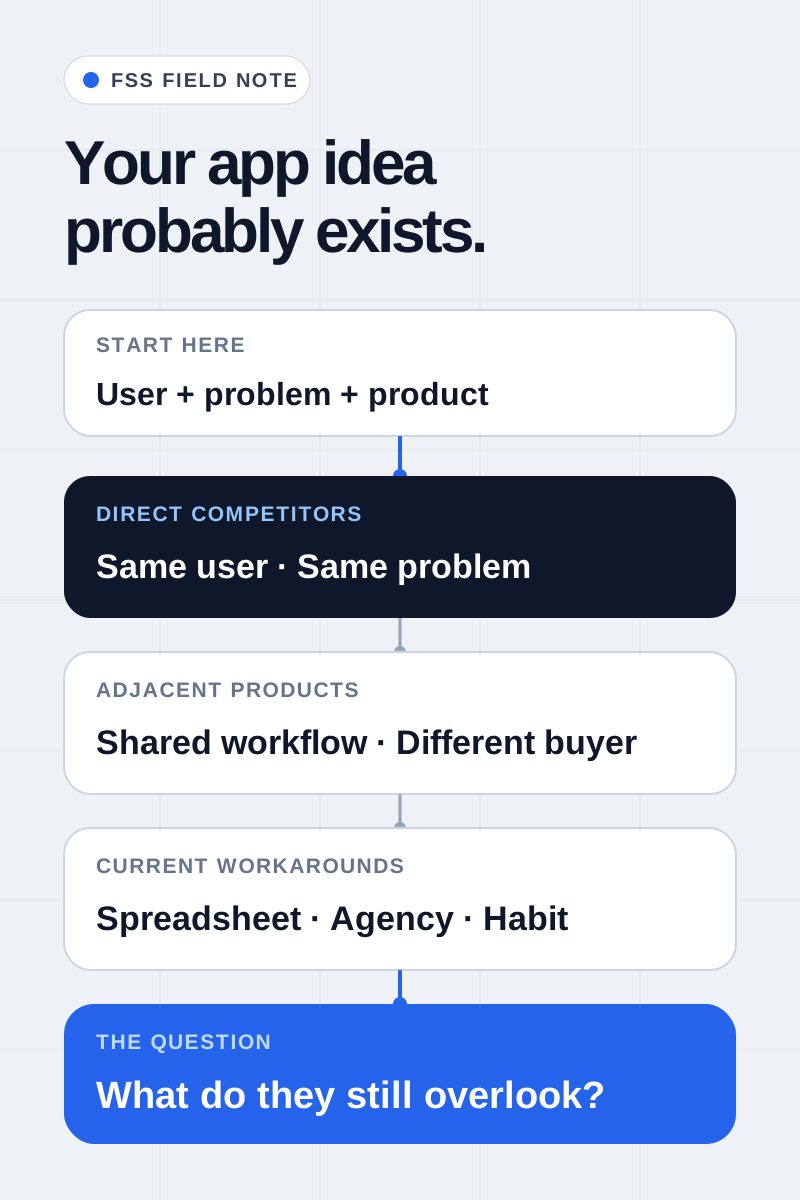
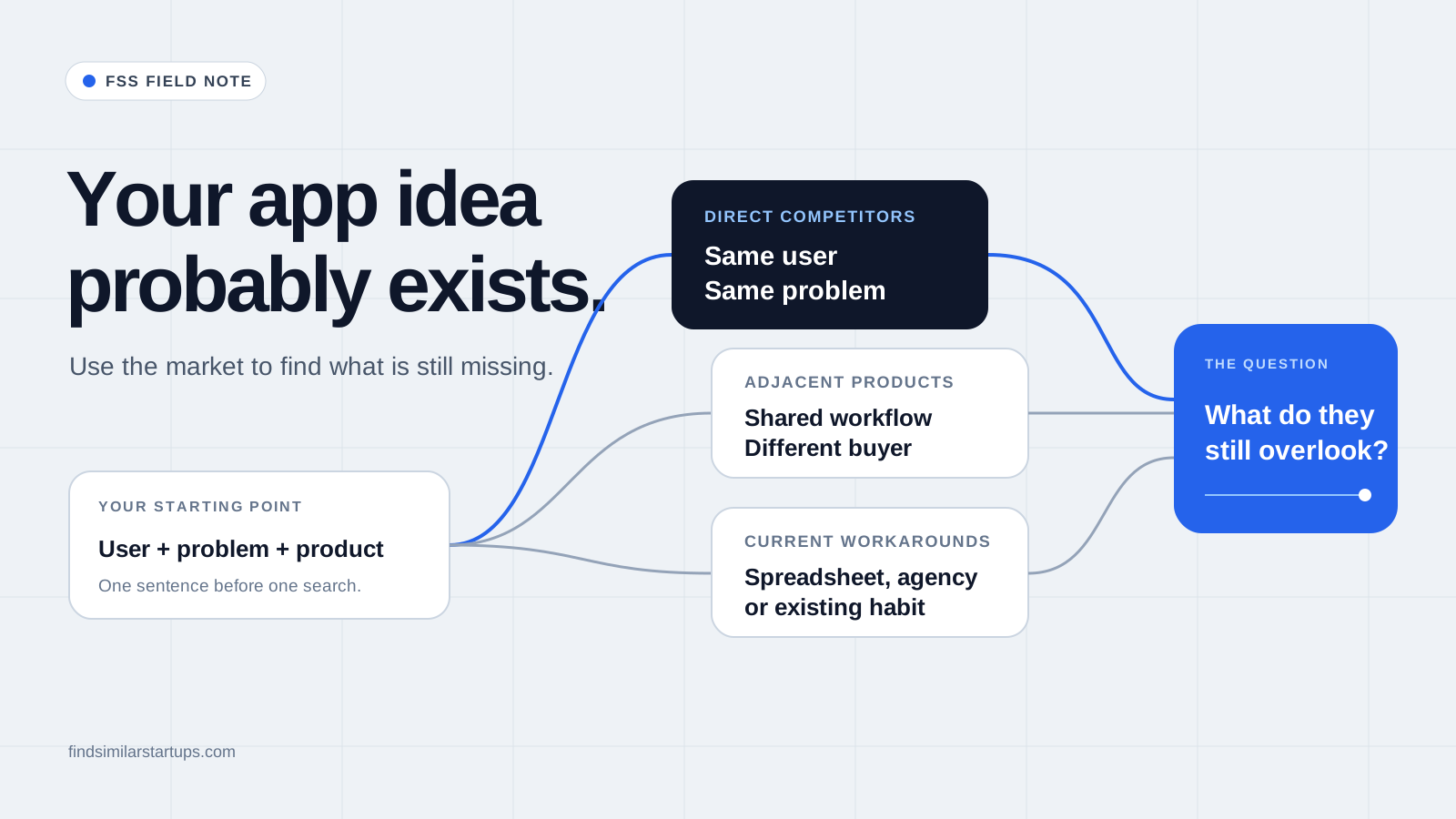
Your app idea probably exists in some form.
Another product may serve the same customer. It may solve one part of the workflow you have in mind. Finding it can feel like arriving late, especially when the idea came from a problem you know firsthand.
Use that discovery as research. A competitor gives you a product, price, positioning, and users to learn from. You can compare what exists with the problem you noticed before you spend months building.
Good startup ideas begin with problems
Paul Graham argues in How to Get Startup Ideas that founders find better ideas by noticing problems, especially problems they have experienced themselves. He summarizes the approach in one line:
“Live in the future, then build what's missing.”
“Missing” does not require an empty market. Several companies can sell products in a category while leaving a specific user or painful workflow underserved.
Graham returns to this point when he discusses competition. Feeling late should not end the investigation. He advises founders to ask whether a group of users needs the product now and whether the founder sees something incumbents overlook.
The existence of a competitor provides evidence that someone else recognized the problem or a neighboring one. You still need to test whether users care about your version and whether they will change their behavior for it.
Describe the idea before you search
Start with one sentence that names the user, problem, and product.
This description is too broad:
An AI productivity app.
This description gives a search something useful to work with:
A meeting assistant for small design agencies that turns client calls into assigned tasks and follows up when work gets stuck.
The second version identifies a buyer and a workflow. It helps you distinguish a direct competitor from a general transcription tool or a project-management product that happens to use AI.
Search from more than one angle
Search for the problem in the words a user might type. Check startup directories, Product Hunt, BetaList, app stores, and ordinary Google results. Different sources will expose established products and small projects.
You can also paste the description into Find Similar Startups. FSS searches for products that overlap in customer, problem, and workflow, then filters weak matches and keeps emerging companies visible beside established ones.
Review the results with two questions:
- Does this product solve the same problem for the same user?
- Which part of my idea does it leave unsolved?
Feature overlap alone can mislead you. Two products may both use AI and dashboards while serving different buyers. A smaller product with fewer shared features may compete more directly because it solves the same job.
Write down what existing products overlook
Finding a competitor only tells you where to look next. Open the product, read its positioning, check its pricing, and look for user complaints.
Write one precise sentence about the gap you see:
Current meeting assistants produce transcripts for large sales teams. Small agencies need client decisions turned into work their existing project tool can track.
That sentence may prove wrong after you speak with users. It still gives you a claim to test. “I will build a better version” does not.
If an existing product solves the same problem for the same user and gives them little reason to switch, pause before building. Talk to those users and find out whether the problem you noticed still costs them time or money.
If current products ignore a user you understand or leave an urgent part of the workflow unfinished, you have a place to begin. Your first version can serve that narrow group before you think about a larger market.
No competitors is not proof of originality
An empty search can mean that you used the wrong language. The product may live in an adjacent category, serve another industry, or describe the problem with terms you have not learned.
Search again with the user's job and current workaround. Ask prospective users how they solve the problem today. They may name a spreadsheet, an agency, or a feature inside a broader product.
If you still find nothing, keep both explanations open: you may have noticed an early opportunity, or the problem may not create enough demand for a company. Competitor search cannot settle that question.
Find the companies around your idea
Describe your customer, problem, and proposed product in Find Similar Startups. The result gives you a first map of direct competitors, established companies, and emerging products to inspect.
Use the map to improve the next question you ask a user. The goal is to understand what exists and what your idea must do differently before you build it.
Frequently asked questions
Does an app idea need to be unique?
No. A founder needs a specific user problem and a reason that user would choose the new product. Existing competitors can help you see category language, buyer expectations, and gaps.
Is competition a good sign?
Competition shows that other teams recognized the problem or a related opportunity. It does not prove demand for your product. Check who uses the existing solutions, what remains painful, and whether your approach gives a group of users a reason to switch.
Can Find Similar Startups validate my idea?
FSS finds and ranks companies around a product description. It gives you competitor context for further research. You still need to test demand with prospective users.
Keep reading the market map
Related posts that connect this note to the rest of the analysis.
Find the companies already building around your idea.
Check your idea